Named accounts and your own lists
Add a company directly, paste a domain or import a structured list when the target accounts are already known. The engine validates the record, researches the context and prepares a draft.
I built the Frankow Ltd Outreach Engine to turn a clear commercial target into researched prospects, personalised first-touch emails and accountable follow-up—without turning prospect development into bulk automation.
Outreach EngineFrankow Ltd / OutreachIn UK and European market-entry work, the difficult part is rarely producing a long list. It is deciding which accounts matter, why the proposition is relevant, who should receive it and what a credible first conversation sounds like.
I built the engine because generic sales automation strips out that judgement, while fully manual research makes disciplined outreach slow and inconsistent. This system sits between those extremes.
Frankow Ltd sets the commercial direction. Market, channel, partner profile, value proposition and evidence come first.
The engine adds structured execution. It researches, drafts, records sources and keeps each first email behind operator approval.
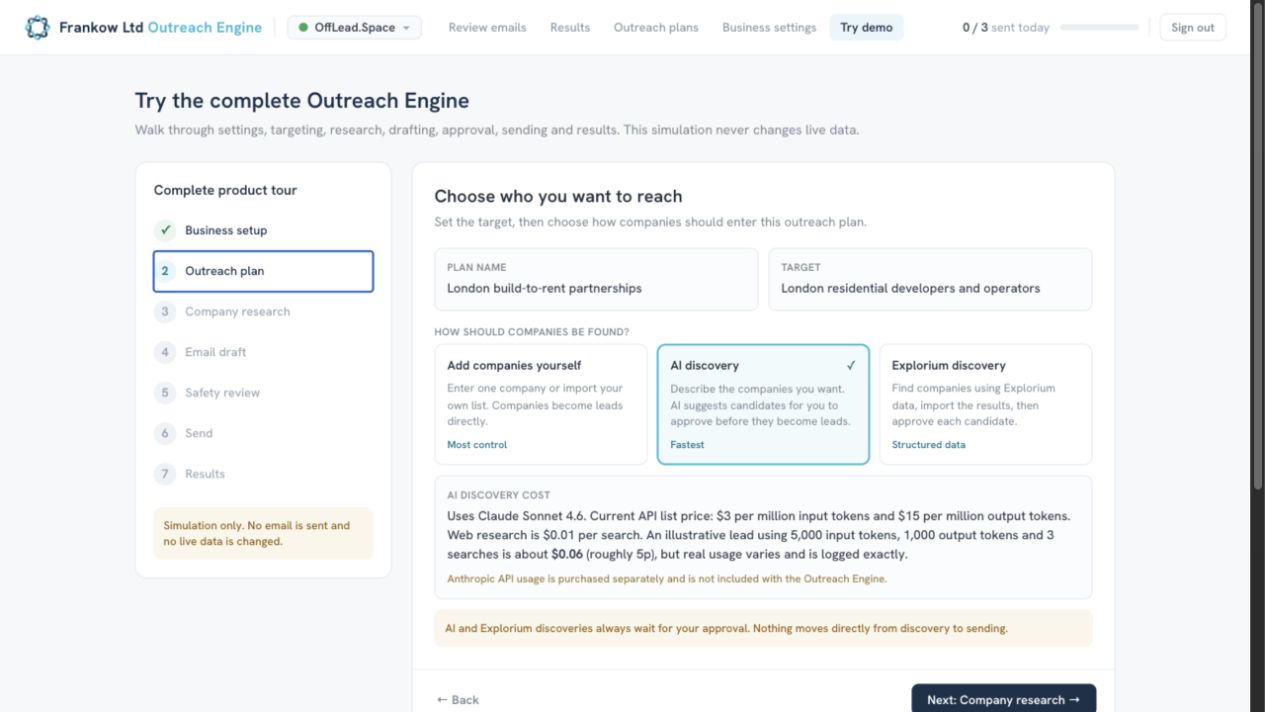
Company sourcing and contact discovery are explicit choices. Regardless of the route, information is reviewed before it enters the send workflow.
Add a company directly, paste a domain or import a structured list when the target accounts are already known. The engine validates the record, researches the context and prepares a draft.
Describe the company type, geography and reason for contact. Claude proposes real candidate businesses, records supporting sources and stages them for human approval before they become leads.
Use natural-language searches over Explorium’s B2B data, preview a sample and import structured company or professional records. Verified contact details can be revealed only for prospects worth the additional credit cost.
Cost note: Anthropic API usage and Explorium/Vibe Prospecting credits are third-party usage costs, not included in the consultancy fee or engine hosting. Vendor prices and coverage change; each campaign should use current estimates rather than treating these examples as fixed pricing.
The system supports the work. It does not replace the operator’s decision about fit, accuracy or tone.
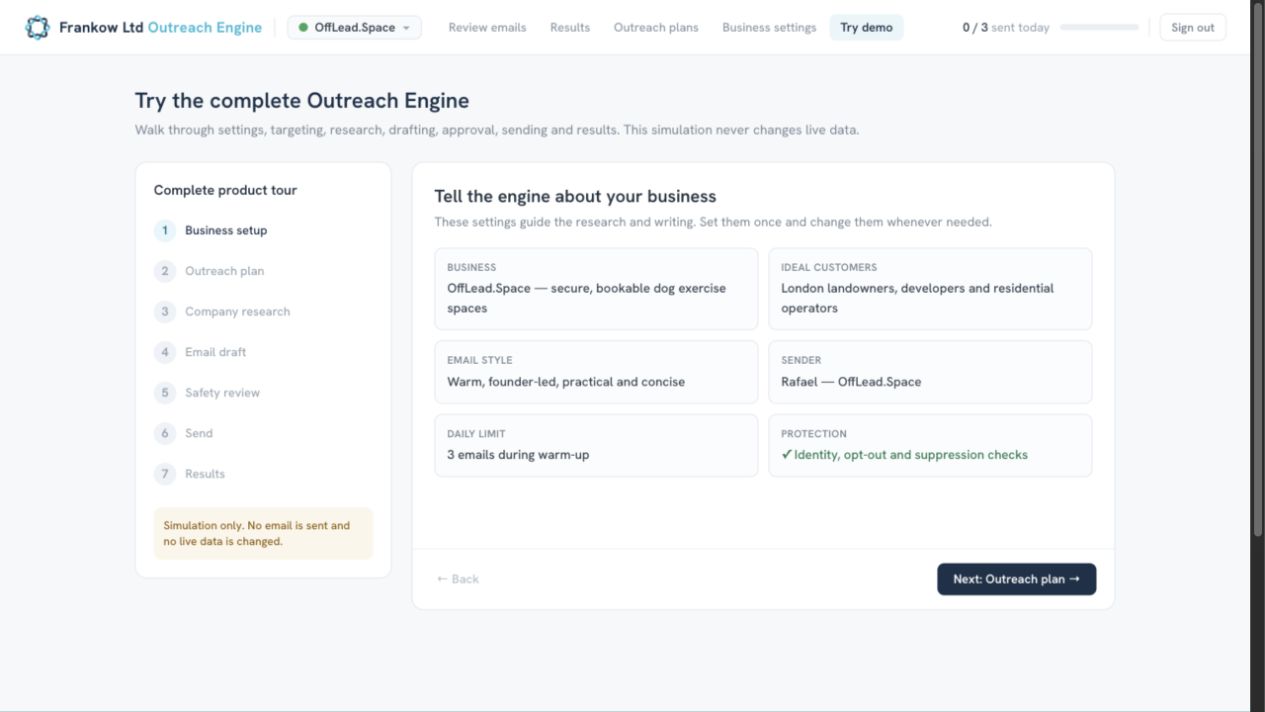
Define the offer, audience, geography, positioning, tone and the specific outcome the outreach should open.
Start from named accounts, discover candidates with AI, or use structured Vibe Prospecting data.
The engine checks the business, records source URLs and marks uncertain claims as needing verification.
A concise message is generated from the campaign context, research, founder voice and approved compliance footer.
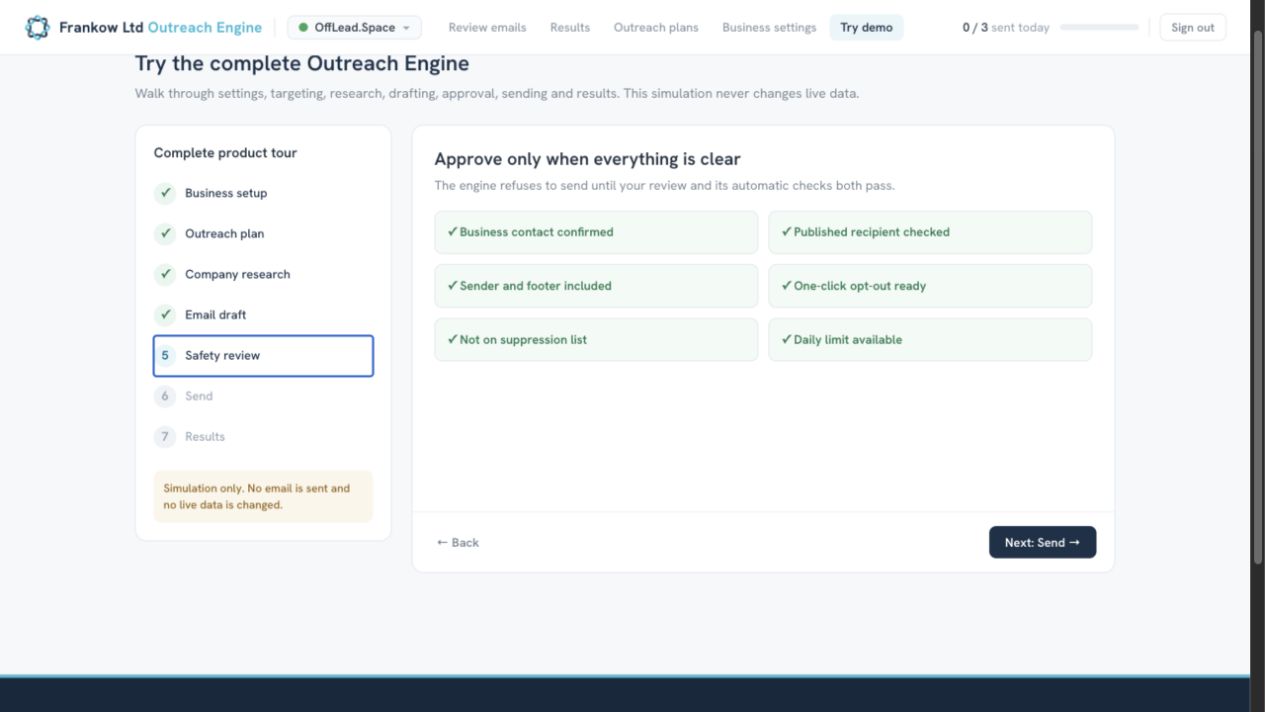
The operator checks the company, recipient, research and exact draft. Editing invalidates the previous approval.
Send limits, suppression and unsubscribe checks run again at send time. Costs, sends and replies feed campaign results.
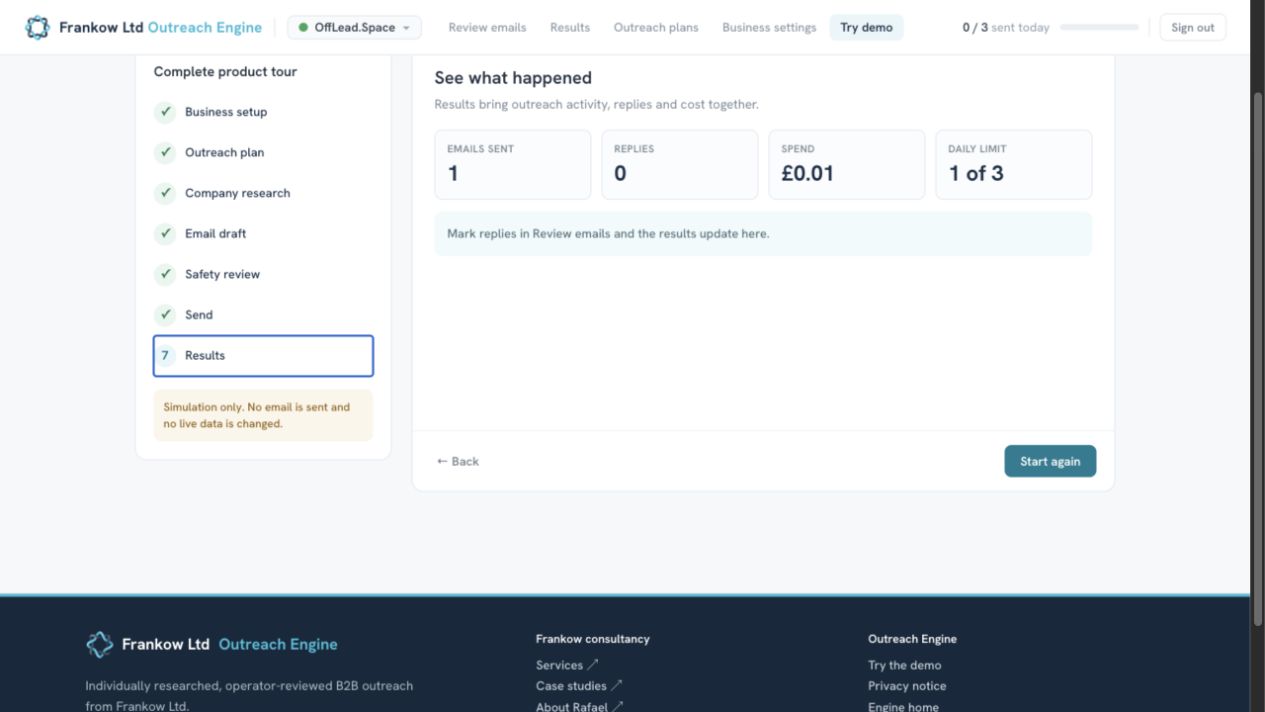
The current interface separates business settings, outreach plans, email review and results so the next action is clear.


The system is deliberately low-volume and built around review, suppression and traceability rather than throughput.
Every first email waits for operator review. Changing the draft or recipient removes its sendable state.
The operator reviews the company and recipient in context; the interface does not delegate that judgement to an AI label or add a meaningless extra click.
Opt-outs and blocked addresses are checked across the engine, not only inside one outreach plan.
Identity, visible opt-out wording and signed one-click unsubscribe are required before sending.
Syntax and mail-domain checks fail closed. Pattern-guessed addresses remain blocked during launch.
Sending stays deliberately small while a new domain builds reputation. Scheduled sending remains disabled at launch.
These controls support responsible UK B2B outreach; they are not a blanket legal guarantee. Lawful use still depends on the targeting, relevance, records, transparency and circumstances of each campaign.
The Outreach Engine is part of the operating system I use to support UK and European market entry, distribution, partnerships and account development. It helps maintain research quality and follow-through after a commercial direction has been agreed.
It is not sold as a contact-list machine or autonomous email service. The value comes from combining the system with a clear route-to-market decision and experienced operator review.
No. It is designed for individually researched, low-volume B2B outreach. Every first email remains behind operator approval, and the launch sending limit is deliberately conservative.
No. AI can suggest companies, research context and prepare a draft. Discovered companies, recipient details and the final email remain subject to human review.
It provides a natural-language route into structured B2B company and professional data. The engine uses a preview-and-approval workflow so credits are committed only after the sample and cost estimate are reviewed.
That is the main reason it exists. It helps turn an agreed market, partner or account strategy into consistent prospect research, relevant first-touch communication and visible next actions.
No software can guarantee compliance independently of how it is used. The engine enforces identity, opt-out, suppression and review controls, while the operator remains responsible for targeting, relevance, lawful basis and records.